
Two brewers dominate the conversation among home coffee drinkers who want a strong cup without buying a full espresso machine: the Moka Pot and the AeroPress. Both are inexpensive, both are portable, and both produce a concentrated coffee that sits closer to espresso than to drip. Beyond that, they work in thoroughly different ways, and that difference shapes everything from flavor to how much attention your morning requires.
This comparison breaks down how each device brews, what the cup actually tastes like, how each handles cold coffee, and which one tends to fit specific routines.

How the Moka Pot Works
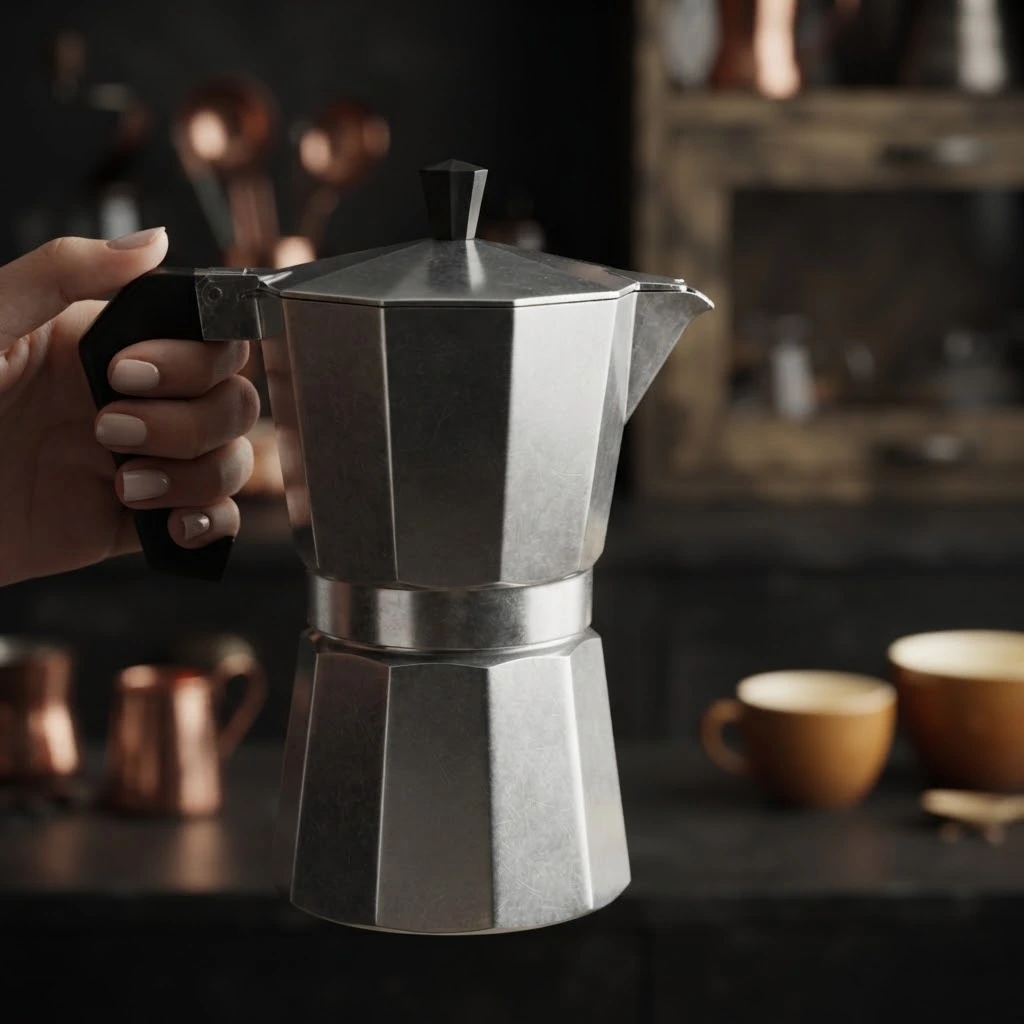
The Moka Pot is a stovetop brewer built from three stacked sections. The bottom chamber holds water. Above it sits a metal funnel basket filled with ground coffee. The top chamber collects the finished brew.
You fill the base with water, usually up to the level of the safety valve, add coffee to the basket without tamping it, and screw the two halves together. Placed over medium heat, the water in the base turns to steam. That pressure pushes hot water up through the coffee bed and into the top chamber, where it emerges as a dark, heavy brew.
Because the water is driven through the grounds by steam pressure rather than a pump, the Moka Pot generates roughly 1 to 2 bar of pressure. A true espresso machine operates around 9 bar. That gap explains why Moka Pot coffee is often described as espresso-style rather than espresso. It is strong and syrupy, but it lacks the thick crema a pump machine produces.
Heat control matters more than most people expect. High heat scorches the grounds and produces a bitter, metallic cup. Medium or medium-low heat, with the lid open so you can watch the flow, gives the cleanest results. Pull the pot off the burner as soon as the top chamber fills and you hear a sputtering sound.

How the AeroPress Works
The AeroPress looks like an oversized syringe. It consists of a cylindrical chamber, a plunger with a rubber seal, a filter cap, and paper microfilters. You add ground coffee to the chamber, pour in hot water, stir, wait briefly, then press the plunger down to force the brew through the filter and into your mug.
The full process runs a little under four minutes from start to finish, and you are involved for nearly all of it. The grounds need to be fully saturated with hot water, and a gentle stir or swirl helps ensure even extraction. Pressing too hard or too fast can channel water through the coffee and leave you with a thin, uneven cup.
Because the AeroPress uses a paper filter, it removes most of the oils and fine particles that pass through a metal basket. The result is a cleaner, brighter cup with less sediment than a Moka Pot delivers. Some drinkers find that clarity makes the AeroPress taste closer to filter coffee in body, even when the concentration is high.
What Each Brewer Can Make
Neither device is a general-purpose kitchen appliance. Both are limited to coffee and tea, so you will not be steaming milk or pulling a shot with programmable settings.
With a Moka Pot you can build espresso-based drinks, americanos, and tea. The concentrated output works well as a base for milk drinks, though you will need a separate frother or a stovetop steamer for the milk.
The AeroPress covers the same hot drinks and adds cold brew to the list. You can brew a concentrated shot over ice, or use a longer steep with cooler water to make a cold concentrate. That flexibility is the single biggest practical difference between the two devices.

Taste and Body Compared
The Moka Pot produces a heavier, more textured cup with visible oils and a bolder mouthfeel. Flavors tend toward dark chocolate, toasted nuts, and caramel, especially with medium-dark or dark roasts. It rewards grinders set to a fine consistency, similar to what you would use for espresso but slightly coarser to avoid clogging the basket.
The AeroPress yields a lighter-bodied but still concentrated brew. The paper filter strips out much of the oil, so the cup reads as cleaner and more acidic, with fruit and floral notes coming through more clearly. Grind size is flexible here, and adjusting it is one of the main ways AeroPress users tune their results.
Neither brewer is objectively better on taste. The Moka Pot suits drinkers who want weight and intensity. The AeroPress suits those who prefer clarity and the ability to change the profile by tweaking grind, water temperature, and steep time.
Cold Coffee and Seasonal Drinking
Cold brew has a distinct flavor profile that comes from a long, room-temperature or refrigerated steep rather than heat. The AeroPress can produce it directly. The Moka Pot cannot, though you can brew hot and chill the result.
Chilling Moka Pot coffee is not the same drink. Heat extraction pulls out compounds that cold water leaves behind, so the chilled version tastes sharper and more bitter than a true cold brew. If iced coffee is a regular part of your routine, that distinction matters.
Effort, Timing, and Cleanup
The Moka Pot is a hands-off brewer once it is on the stove. You assemble it, set the heat, and wait. That makes it a reasonable choice for mornings when you are getting dressed, packing lunches, or handling a school run while the coffee brews. Cleanup involves disassembling three parts, rinsing them, and letting them dry. A gasket and filter screen need occasional replacement, typically every year or so depending on use.
The AeroPress demands your attention for the full brew. You cannot walk away and come back to a finished cup. In exchange, it cleans up in seconds: press the puck of grounds into the trash, rinse the plunger and chamber, and you are done. It is also nearly unbreakable, which is why it has a following among travelers and campers.
Cost and Durability
Both brewers sit at the affordable end of the coffee equipment market, and both avoid the recurring cost of paper filters in different ways. The AeroPress uses paper microfilters, though reusable metal filters are widely available as an alternative. The Moka Pot uses no filters at all, only a metal screen and a rubber gasket that wears out over time.
Durability favors the Moka Pot in one respect and the AeroPress in another. An aluminum or stainless-steel Moka Pot can last decades if you avoid overheating it and replace the gasket. The AeroPress is made largely of plastic, but it is a sturdy, simple design with few parts to fail.
Which One Should You Buy?
If your mornings are rushed and you want coffee that brews while you do something else, the Moka Pot is the easier fit. It also suits anyone who wants a heavier, espresso-style cup as a daily default.
If you drink cold brew regularly, travel often, or enjoy adjusting variables to chase a particular flavor, the AeroPress covers more ground. It costs you four minutes of attention, but it returns flexibility that the Moka Pot simply does not offer.
Plenty of home brewers eventually own both. The Moka Pot handles the weekday default, and the AeroPress handles weekends, iced drinks, and trips. Neither choice is wrong, and the deciding factor is usually how much of your morning you are willing to spend standing at the counter.